Hotels, restaurants and cafés (HoReCa) handle large volumes of beverage glass beverage packaging every day. Behind them, wholesalers and distributors connect producers with thousands of hospitality businesses, managing the movement of products and packaging across complex supply chains.
These networks do not stop at national borders. A product might be filled in one country, distributed through another and consumed somewhere else entirely.
For single-use packaging, its journey often ends after consumption. Reuse changes this. Bottles need to find their way back into the system so they can be washed, refilled and used again.
This raises the question of what role HoReCa could play in a cross-border system, and how packaging can make its way back when products, businesses and supply chains cross national borders. The Interpool project is currently mapping the situation to help answer it.
Packaging is essential to how products move through our economy, but the amount that becomes waste remains a major challenge. According to recent data published by Eurostat, the EU generated 79.7 million tonnes of packaging waste in 2023, equivalent to almost 178 kg per person. Glass accounted for close to one fifth of this total.
While efforts to address packaging waste have traditionally focused on recycling, reuse can complement these efforts by keeping suitable packaging in circulation through repeated return, washing and refilling.
New EU rules are giving reuse a stronger push. The Packaging and Packaging Waste Regulation (PPWR), which started applying in August 2026, aims to reduce packaging waste and encourage businesses to use packaging as many times as possible, keeping materials in circulation for longer.
But setting reuse targets is one thing. Making reuse work in practice – and across borders – is another.
This is the challenge at the heart of Interpool. Funded by the EU under Interreg North-West Europe, the project brings together 14 organisations from the Netherlands, Belgium, France and Germany to explore how existing reusable glass systems and infrastructure can better connect across borders.
And one of the sectors of importance for cross-border reuse is the HoReCa branch.
What does cross-border reuse mean for HoReCa?
Reusable packaging systems can work differently from one country to another. Bottles that are common in one market may not easily fit into systems used elsewhere. Businesses may have different ways of collecting, storing and returning empty packaging.
There are also questions around responsibility. Who owns the packaging while it moves through the system? Who is responsible for collecting and washing it? And where should a returned bottle go if it was consumed in a different country from where it was filled?
Pooling offers one possible way forward. Instead of every producer organising a separate system, multiple actors can share resources.
For cross-border reuse, this raises an important question: which parts of existing systems need to become compatible for them to work together effectively? Making better use of existing return networks and washing facilities could reduce the need to recreate the same infrastructure in every market.
Interpool is exploring precisely these points of connection: how different national reuse systems can work together while recognising that they do not all operate in the same way.
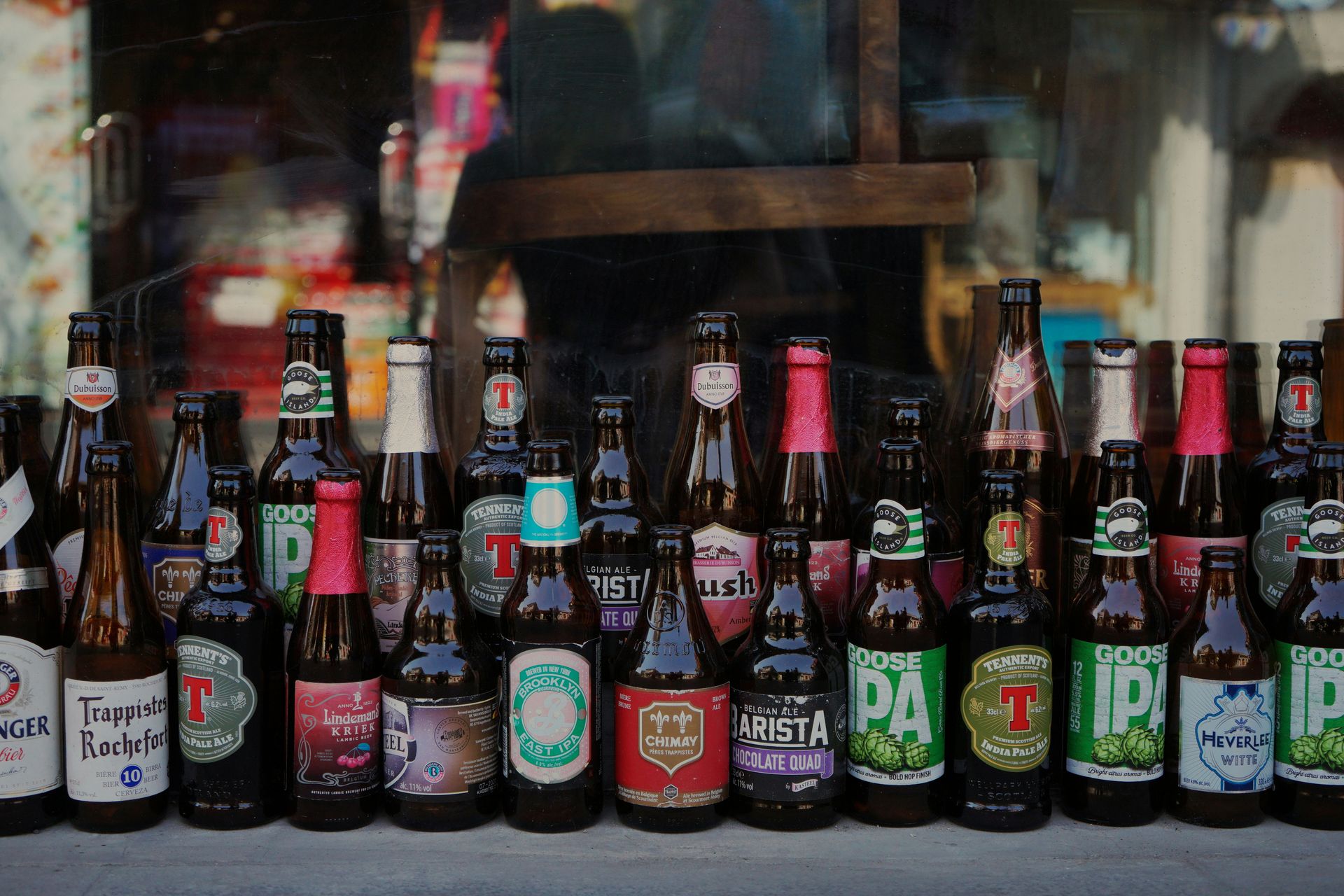
Learning from existing HoReCa experience
Interpool does not start from scratch. Existing reuse initiatives already provide practical lessons about what can make these systems work.
In the Netherlands, Interpool partner Enviu has worked with partners to explore how reusable wine bottles could work within the HoReCa supply chain. The approach makes use of existing distribution networks to collect empty bottles and bring them back for washing and reuse, making returns easier for participating businesses as outlined in this article (in Dutch).
The Dutch experience points to a broader lesson: reuse becomes easier when it can build on systems and relationships that businesses already use. Work with HoReCa wholesalers in the Netherlands has highlighted smart return logistics, a viable business case, behaviour change and collaboration across the value chain as important conditions for successful reuse.
Other Interpool countries provide additional lessons. The following examples are mainly national rather than cross-border systems. They offer relevant lessons and building blocks, but they don’t yet demonstrate a functioning cross-border HoReCa system.
Germany has decades of experience with shared reusable packaging. In the system managed by Interpool partner Genossenschaft Deutscher Brunnen (GDB), multiple mineral-water producers use the same types of reusable bottles and crates. Beverage wholesalers help return empty packaging from retailers to producers. Because the bottles and crates are shared within a pool, they generally do not need to return to the producer that originally filled them, but can instead go to the nearest participating mineral-water producer using that format. This allows for efficient logistics. To learn more, check this page.
France offers another approach. Citeo's R-Cœur range has introduced standardised reusable packaging designed to be accessible to different brands (Citeo is an Interpool partner). In 2025, delivery company Le Fourgon became the first distributor to commercially use an R-Cœur reusable glass bottle, initially for milk in northern and eastern France. You can find more information here.
Belgium also has a long tradition of reusable beverage packaging. Interpool partner Fost Plus highlights an initiative involving La Conserverie & Moutarderie Belge, Foodprint and Bring Back, where reusable glass jars can be returned through existing deposit-return machines, showing how established infrastructure can support new reusable packaging. Check this page to learn more.
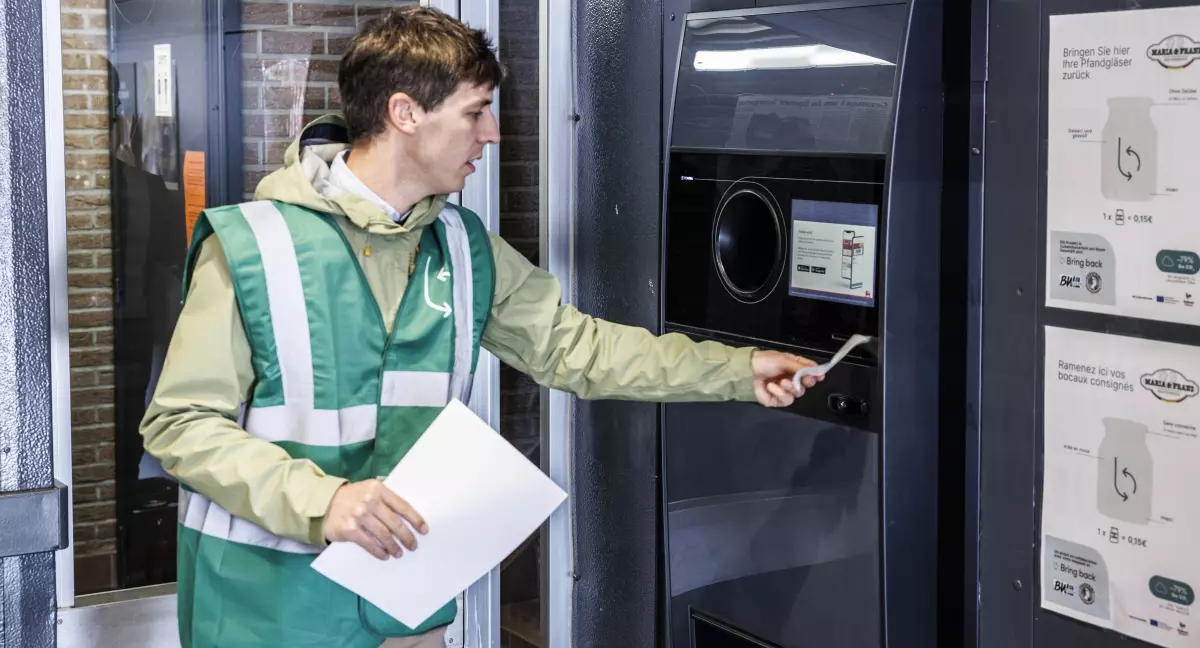
These examples show different pieces of the puzzle, from shared packaging and standardised formats to using existing networks and infrastructure to support reuse.
Designing the system with HoReCa, not just for HoReCa
Ultimately, a successful reuse system needs to work not only environmentally and technically, but also for the businesses expected to use it.
This is why involving HoReCa businesses early is so important.
They can help Interpool understand what happens in practice after a reusable bottle reaches a restaurant, café or hotel. How are empty bottles currently stored? How and when are they collected? What takes additional time or space? And what would make participating in a reuse system easier?
These are questions that cannot be answered by looking at packaging formats and infrastructure alone.
Interpool will test solutions through pilots, making practical input from businesses across the supply chain particularly valuable. By involving HoReCa actors in their development, the project can test its assumptions against everyday operations and better understand which solutions have the potential to work at a larger scale. This way, the sector is taking a pioneering role in understanding what a workable cross-border system should look like.
The aim is not to design a reuse system for HoReCa and then ask businesses to adapt to it. It is to involve the sector in understanding what a workable cross-border system should look like.
Interested in getting involved?
Are you a HoReCa business, wholesaler, or another player in the hospitality supply chain in Belgium, Germany, France, or the Netherlands? We'd love to hear from you. Your insights will help us better understand the needs of the HoReCa sector and shape Interpool's upcoming cross-border pilots.
To contribute your experience, get involved in the pilots, or ask us a question, contact interpool@fairresourcefoundation.org.
You can also stay up to date with Interpool by signing up for project updates here.