A blog by Henriette Schneider (Pro Mehrweg)
Germany has one of the world’s largest beverage reuse systems, with close to 10 billion reusable bottles circulating among thousands of businesses and shoppers. In October 2026, the Interpool consortium saw it in action in Stuttgart. In our newest blog, Henriette Schneider (Pro Mehrweg) shares her key takeaways. The main one: there’s no single blueprint, but plenty to learn.
Built from the bottom up over more than a century, the system has no central operator, yet more than 95% of bottles come back. It handles a wide variety of bottle designs at scale, and returning bottles is simply part of everyday life.
But scaling an established system is not the same as building a new one. Newer systems lack Germany’s decades of experience, but they can build in its lessons from the start. And the cross-border reuse that Interpool is exploring doesn’t need identical systems everywhere, only enough common ground to connect.
Curious what the lessons - and the remaining questions - are? Read the full blog below.
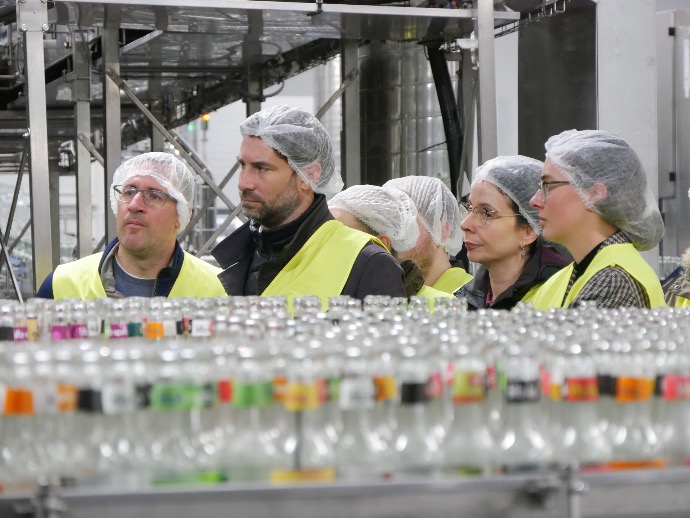
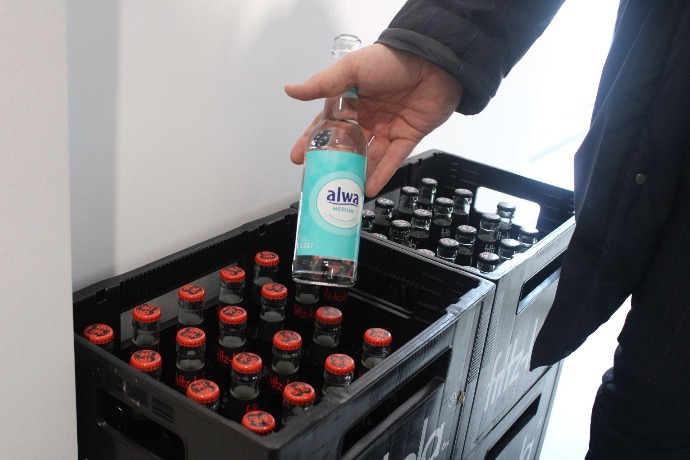
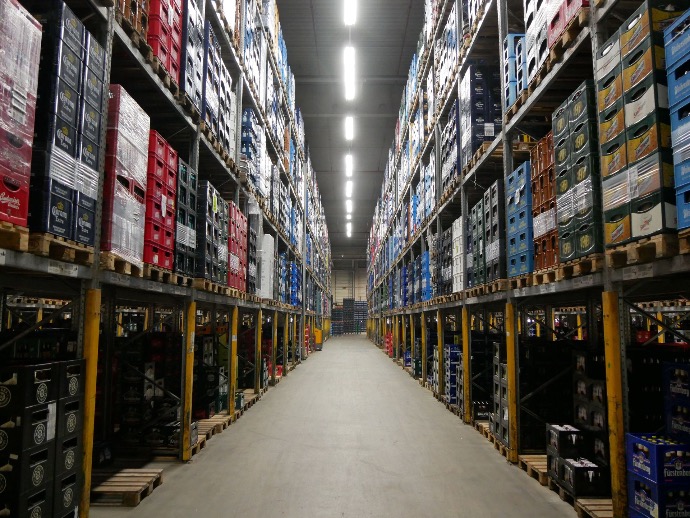
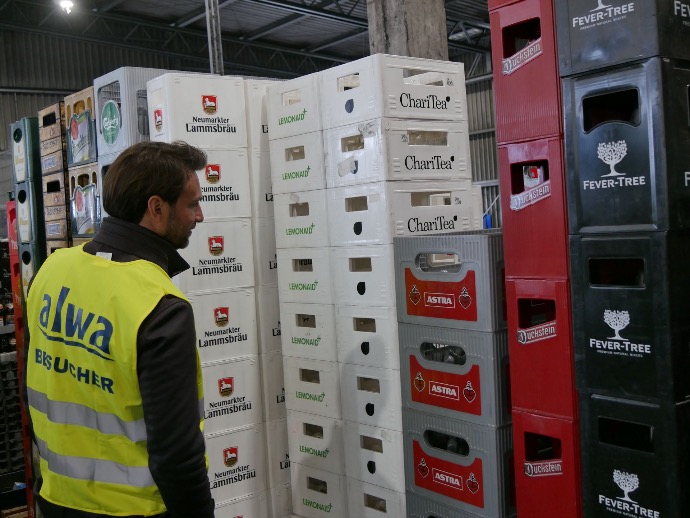
A field trip to Stuttgart
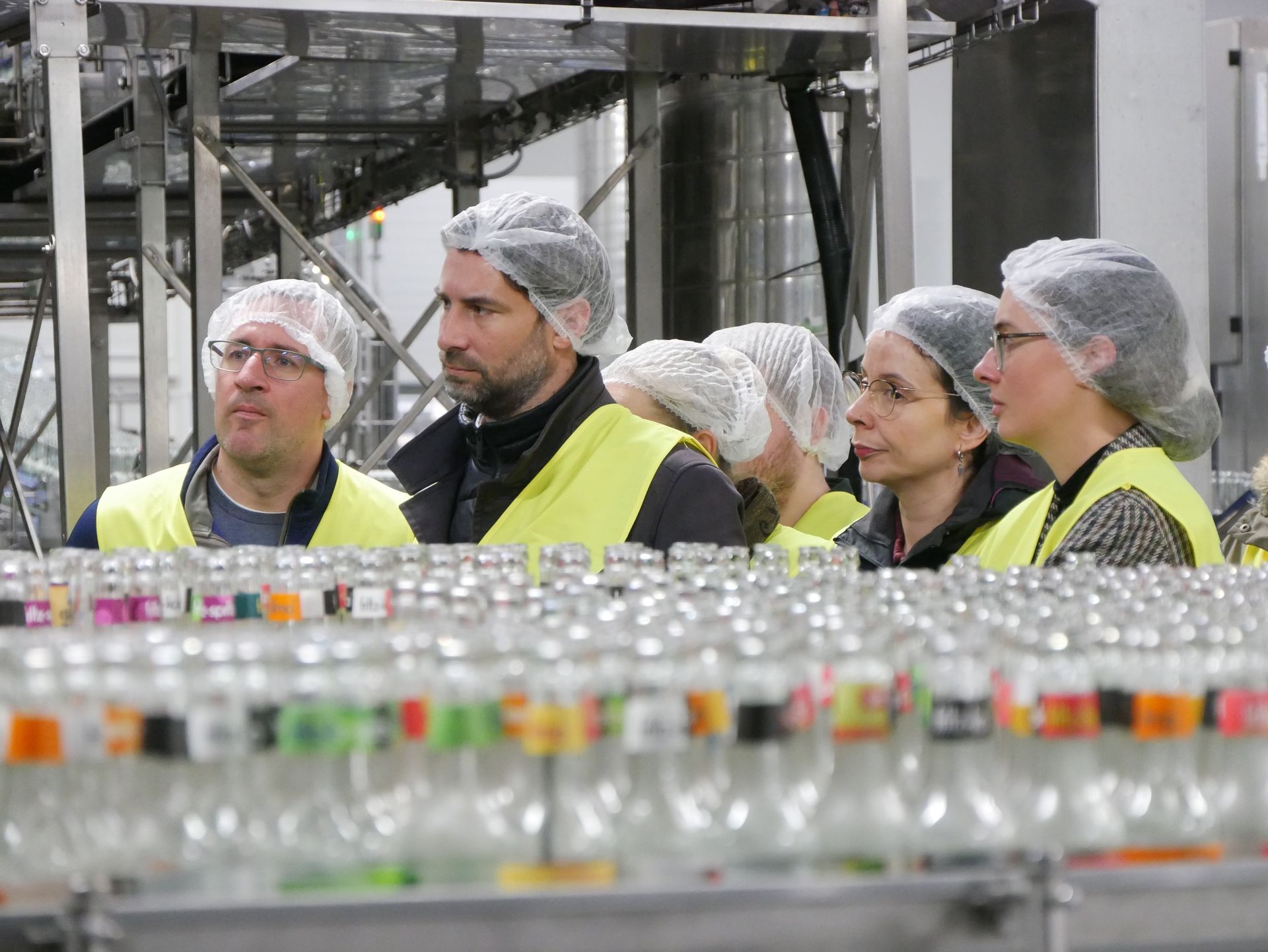
In October 2026, the Interpool project consortium gathered in Stuttgart, Germany, for its second consortium meeting. A key highlight on the agenda was a full-day field trip exploring the ins and outs of the German beverage reuse system.
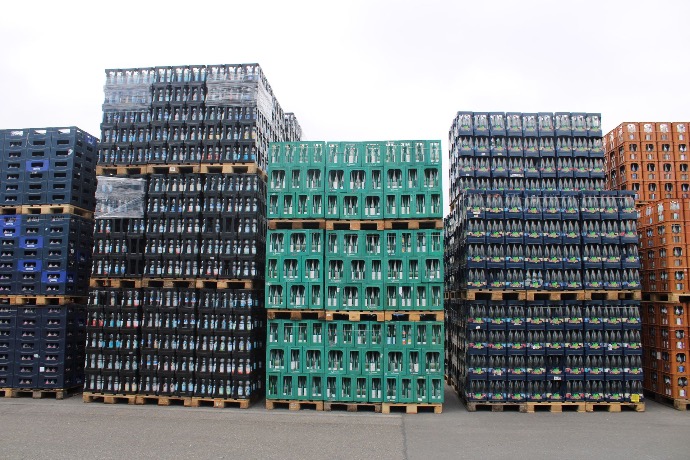
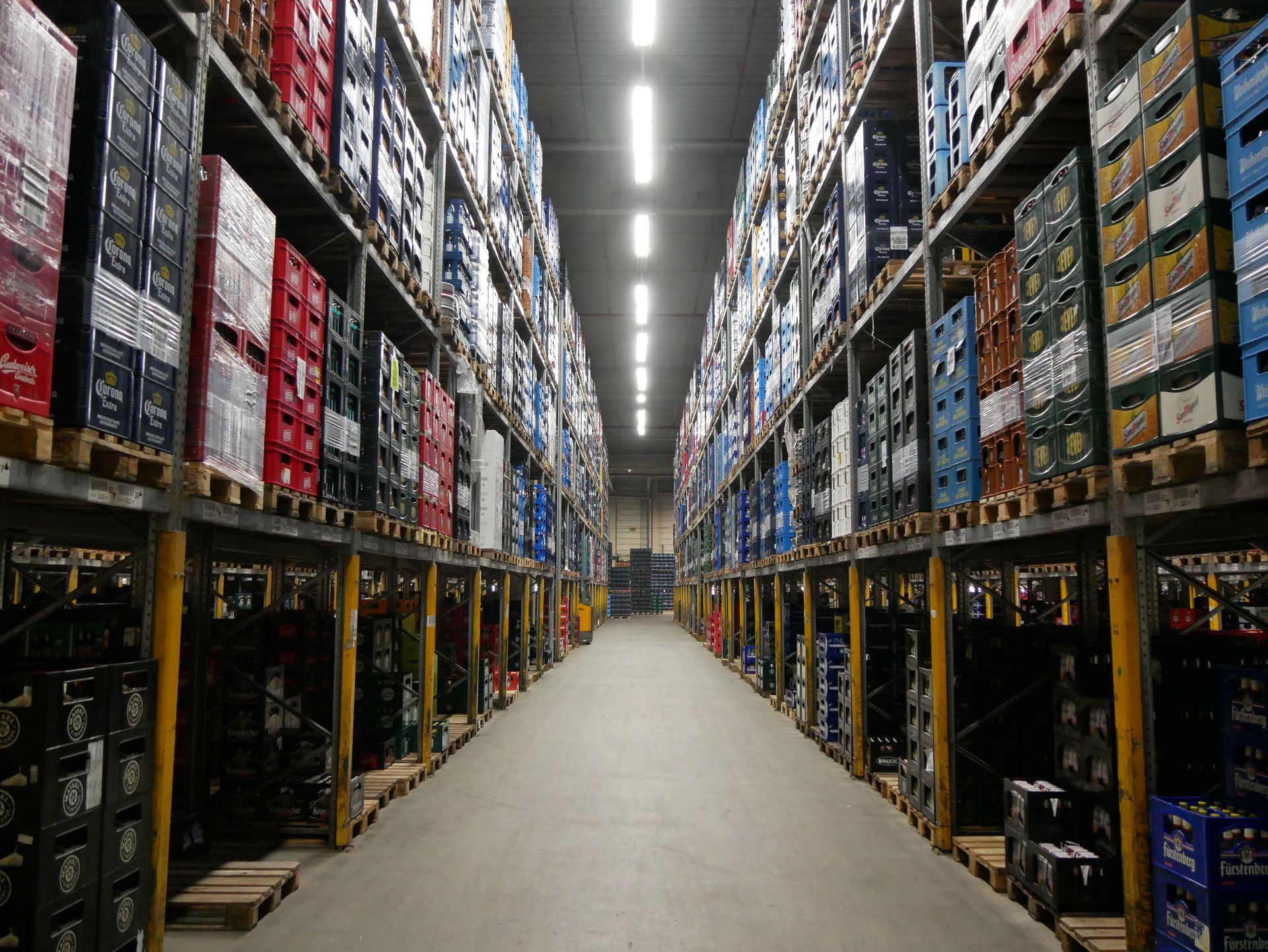
Within this system, close to 10 billion reusable glass and PET bottles in over 350 million crates move between producers, wholesalers, retailers and consumers. Several thousand businesses are part of this unique system, selling a diverse range of mineral waters, soft drinks, beers, and juices in reusable bottles.
Together with external guests, the Interpool partners visited a reuse filling plant, a beverage wholesaler site, and a supermarket to get first-hand insights into the entire bottle reuse cycle.
For Interpool, the field trip had two main objectives: to understand the operations behind a highly scaled reuse system and to explore how to make reuse systems work in harmony across borders.
Our key takeaway: there is no single blueprint for a successful reuse system. But the German example offers valuable insights into collaboration, standardisation and system design.
1. Historically evolved collaboration instead of top-down regulation
The German beverage reuse system has evolved largely through bottom-up collaboration rather than top-down system design.
The system has evolved over more than a century, with roots dating back to the early 1900s. Unlike markets where reusable beverage packaging in the retail environment has largely disappeared and now needs to be rebuilt, Germany has maintained a substantial reuse infrastructure.
A defining feature is the strong role of small and medium-sized enterprises (SMEs). Thousands of companies, from regional beverage producers to wholesalers and retailers, participate in the system. Over time, they have collaborated on practical solutions to shared challenges.
Until the EU Packaging and Packaging Waste Regulation (PPWR) became applicable in August 2026, the legislative framework underpinning this system was relatively light-touch. It centered around a clear definition of reusable packaging, with a deposit and existing infrastructure as key criteria, an obligation for retailers to take back reusable packaging, and a non-binding, market-wide target for reusable beverage packaging of 70%.
2. Decentralised system design that builds on efficient operations and market mechanisms
The German system has no central system operator or coordinating entity. It relies on highly decentralised operations, spread across thousands of companies. Industry-led self-coordination encompasses roles and responsibilities, standards, and operational aspects.
Because the system needs to be beneficial for participating companies, it is geared to maximising efficiency. For example, bottles are washed directly before filling at the same facility, rather than being transported to separate, centralised washing centres. Contract filling allows beverage producers to use other producers‘ existing filling lines, and a centralised landscape of wholesaler companies keeps loops as regional as possible, connecting producers and retailers in managing the circulation of bottles and crates. Together, these established practices result in a system with high performance: reusable beverage packaging accounts for a substantial share of the German beverage market, and return rates are well above 95%.
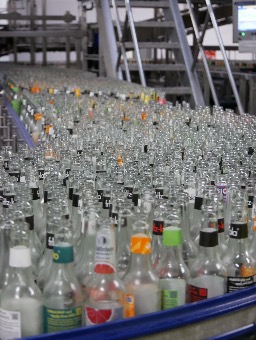
3. Tackling packaging diversity with efficient processes
More design options meet the needs of different brands, regional markets and beverage types, but they inevitably make sorting, handling and logistics more complex. When it comes to standardisation of packaging design, the German reuse system is certainly not a best-in-class example. Yet, its wide variety of bottles and crates in circulation demonstrates that packaging diversity and effective large-scale operations can coexist. Alongside manual sorting, increasingly sophisticated technological solutions, including AI-supported approaches, can help identify and separate different packaging formats, effectively tackling the system’s historically evolved complexity.
4. Best-in-class pool management for standard packaging
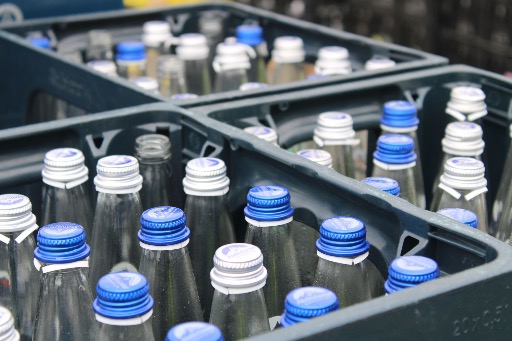
Despite its considerable packaging diversity, Germany also provides an example of a standardised, shared bottle pool. The GDB mineral water pool is Europe's largest centrally managed reusable bottle pool and accounts for more than 70% of the reusable bottles in circulation in Germany’s mineral water sector.
GDB acts as a neutral trustee on behalf of the participating mineral water producers, ensuring fair collaboration and the bottles’ quality. Today, the pool operates with nine bottle types and their corresponding crates, enabling producers and retail partners to share packaging and reduce costs and sorting efforts.
All in all, this arrangement not only provides a fairer cost and benefit distribution, it also significantly improves transparency, data availability, and system adaptability, for example as new packaging rules under the PPWR are phased in.
5. Reuse as part of everyday consumer behaviour
In Germany, returning beverage packaging is an established part of consumer routines. Most reusable and single-use beverage packaging is subject to a deposit and can be returned to retail outlets. Automated reverse vending machines (RVMs) are widely available in supermarkets, making returns convenient and accessible. The performance of the reuse system, in addition to the quality of infrastructure, is of course highly dependent on consumer habits.
What does this mean for Interpool?
The field trip invited us to look beyond theoretical system design and consider the practical conditions of reuse at scale. Germany’s beverage reuse system offers useful lessons for Interpool’s goal of scaling reusable glass packaging across borders and making reuse systems work together.
At the same time, the field trip and the workshops demonstrated that scaling an established reuse system is not the same as building one from scratch.
Germany draws on decades of experience, existing infrastructure, established relationships, operational know-how and familiar consumer practices. Countries or regions where reuse is only beginning to develop may face very different challenges. They may need to establish basic infrastructure, build trust between market participants and foster good return habits.
But new systems have the opportunity to incorporate lessons from the outset: digitalisation by design, a manageable but not overly restrictive set of standardised packaging formats, and an appropriate governance and collaboration model.
Thus, rather than copying the German system, it can be used as a basis to explore some fundamental questions:
- Which standards, processes and requirements need to be compatible across borders, and where should local differences remain possible?
- How much packaging standardisation is needed for system efficiency, while leaving room for recognisability and brand identity?
- Which aspects of the system are best coordinated centrally, and what role can industry play?
- How can existing infrastructure, partnerships and practices be leveraged?
- How can reuse become part of everyday consumer behaviour and awareness?
Ultimately, cross-border interoperability does not mean that every country must organise its reuse system in the same exact way. It means identifying the common elements that allow systems to work together and building the partnerships, standards and infrastructure needed to make it possible, efficient and worthwhile for everyone to participate.
That is precisely the challenge Interpool is working to address. The field trip in Stuttgart was an important step in exploring how the lessons of an established reuse system can help shape the scale-up and alignment of glass reuse in the EU.
How does your country’s reuse system compare with Germany’s? We welcome your thoughts. Please get in touch by emailing interpool@fairresourcefoundation.org.